

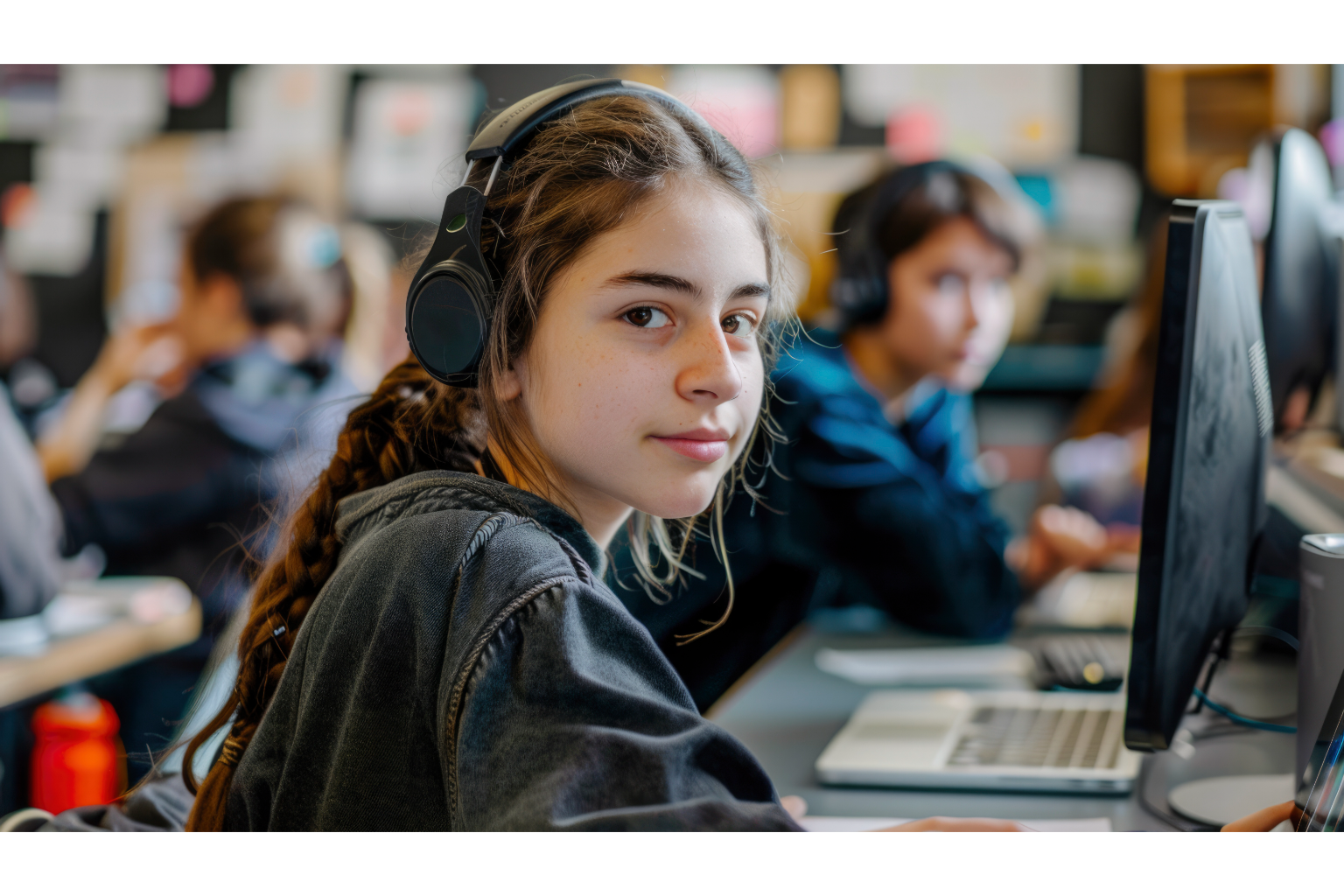
When parents in Charleston, Horry, and Georgetown County ask about computer science internships for high school students, they’re usually picturing the wrong thing. They picture a paid software-engineering role like a college student would have. That kind of internship is rare for high schoolers. What’s actually available — and what’s actually worth pursuing — is a different landscape, and most families end up either chasing the wrong programs or missing the good ones because they didn’t know they existed.
This is what we tell families at our Murrells Inlet and Mount Pleasant offices when a student walks in saying “I want a CS internship.”
The Three Categories That Actually Exist
Structured summer programs at major tech companies. Google’s Computer Science Summer Institute (CSSI), Microsoft Discovery Program, Meta Engage, and IBM SkillsBuild are the big names. These are not paid software internships in the traditional sense — they’re 3 to 6 week immersive educational programs. They’re competitive, free to attend, and look strong on a college application. Application windows open in winter and close in early spring.
University-hosted CS research programs. Programs like MIT PRIMES, Carnegie Mellon Pre-College, NYU GSTEM, and the Research Science Institute (RSI) at MIT take high school students into real research labs. These are arguably more valuable than corporate programs because the student walks out with a research project they can talk about. The catch: most are unpaid, residential, and selective at admit-rates lower than the colleges that host them.
Local and regional internships. This is the category most SC families miss. Charleston has a small but real tech ecosystem — companies like Blackbaud, BoomTown, and a growing list of startups in the Cigar Factory and Pacific Box areas. Myrtle Beach and Conway have smaller tech employers around Coastal Carolina University and Horry-Georgetown Tech. These companies don’t typically advertise high school internships, but a polite, well-written cold email from a 16-year-old with a portfolio gets responses more often than parents expect.
What “Looks Good” vs. What Is Actually Good
Selective colleges have seen the same résumé items thousands of times. A summer at a brand-name tech-camp program (the kind families pay $5,000 for) doesn’t move the needle anymore. What does move the needle:
- A shipped project that real users use, even a small one
- Open-source contributions to a project that isn’t theirs
- A research-style write-up of a problem the student spent a summer on
- Sustained participation in a hackathon community (Major League Hacking, ACSL, USACO)
- A teaching role — running a coding club, tutoring younger students in Python
A college admissions reader can tell the difference between “attended a CS workshop” and “built and maintained a project.” The second story is what lands.
What’s Realistic for SC Public-School Students
Most South Carolina public high schools don’t run AP Computer Science Principles or AP Computer Science A until junior year, and many schools don’t run them at all. That’s the local reality, and it’s the gap that bites students when they apply to selective CS-track programs.
If your student is in 9th or 10th grade and thinking about CS internships, the immediate priorities are not the internships themselves. They are:
- Get into AP CSP or AP CSA. If the high school doesn’t offer them, take them through dual enrollment at Horry-Georgetown Tech, Trident Tech, or via self-study and the AP exam.
- Build something independently. A small project on GitHub — even an ugly one — beats a polished workshop attendance certificate. Codecademy, freeCodeCamp, and CS50 are the standard starting points.
- Compete somewhere. USACO is the gold-standard CS olympiad and has free online judges. Local hackathons run through MLH. AP scores aren’t the only signal admissions readers use.
By the time the student is a junior, the goal is to apply for one of the structured summer programs (CSSI for graduating seniors, NYU GSTEM, Stanford SUMaC) or to land a local internship.
The CSSI / Microsoft / Meta Application Cycle
These all run on similar timelines, and they’re the programs SC families most often ask about:
| Program | Eligibility | Application Window | What It Is |
|---|---|---|---|
| Google CSSI | Graduating high school seniors heading to a 4-year college | January – March | 3-week residential CS intensive |
| Microsoft Discovery | High school juniors and seniors | January – March | Structured tech-career exposure program |
| Meta Engage | Underrepresented HS students in CS | Rolling | Mentorship + project cohort |
| IBM SkillsBuild | Open to all HS students | Year-round | Self-paced credentials + occasional cohort experiences |
| MIT PRIMES | Boston-area juniors (national applicants for PRIMES-USA) | September – November | Year-long mentored research |
If you’re in 11th grade right now and want to apply to one of these for next summer, you should start drafting your application essays this fall. Most of these programs reject applications that read as last-minute.
What We Tell SC Families to Do First
The first conversation we have at College Planning Centers is not about the programs. It’s about the student’s evidence. A student with a real project on GitHub, a clean LinkedIn, and a story about why CS specifically — what problem they want to solve, what software they’ve already built — is competitive for these programs. A student without those isn’t, no matter how strong their grades are.
For Charleston, Horry, and Georgetown County families specifically, that often means we spend the 9th and 10th grade meetings building the *evidence* layer first: portfolio, AP track, dual enrollment, project work. By 11th grade, we’re applying to the structured programs and writing essays. By 12th grade, the student is using all of that to differentiate on their college applications.
If you want to map this out for your student, you can book a consultation or schedule a session directly. We’ve also written about how to plan a competitive academic track in SC and how to think about test prep alongside CS-track planning.
CS internships are not a goal in themselves. They’re an output of a student who’s been building things consistently. That’s the work that has to come first.
Computer Science Internships for High School Students: FAQs for South Carolina Families
Yes, but most computer science internships for high school students are not traditional paid software engineering jobs. They are often structured summer programs, research opportunities, mentorship programs, local outreach opportunities, or project-based experiences. College Planning Centers helps families understand which options are realistic and worth pursuing.
Strong computer science summer programs may include Google CSSI, Microsoft Discovery, IBM SkillsBuild, university research programs, coding cohorts, and selective STEM programs. College Planning Centers helps students compare programs based on eligibility, deadlines, cost, selectivity, and college application value.
A student can start by building a small coding project, creating a GitHub portfolio, taking AP Computer Science or dual enrollment, joining coding competitions, and writing thoughtful outreach emails to local companies. College Planning Centers helps students build the evidence layer before applying.
Computer science internships can help with college admissions when they show real initiative, sustained interest, and practical skill. Admissions readers are more impressed by a student who built something, contributed to a project, or completed meaningful research than by a paid program that only shows attendance.
College Planning Centers helps students build a stronger STEM college planning path by reviewing course selection, AP Computer Science options, dual enrollment, summer programs, coding projects, competitions, and application strategy. The goal is to help the student show consistent interest and real preparation.
A coding portfolio gives students proof of what they can actually build. Even a simple GitHub project can be more valuable than a generic certificate because it shows initiative, problem-solving, and follow-through. College Planning Centers helps students connect portfolio work to their larger college admissions story.
Local high school tech internships may come from small tech companies, startups, university labs, community colleges, nonprofits, or local businesses that need help with websites, automation, data, or software tasks. College Planning Centers helps South Carolina families identify realistic local outreach opportunities.
Taking AP Computer Science can strengthen a student’s preparation, especially for selective CS programs. If the school does not offer AP CSP or AP CSA, students may consider dual enrollment, self-study, CS50, freeCodeCamp, or other structured coding resources.
College Planning Centers helps students prepare stronger CS program applications by organizing deadlines, reviewing essays, strengthening the activity list, identifying project evidence, and clarifying the student’s “why computer science” story. This is especially helpful for competitive programs with early deadlines.
Before applying for computer science internships for high school students, students should build at least one real project, document it clearly, prepare a simple resume, create or clean up a GitHub profile, and practice explaining what they built. College Planning Centers helps students turn those steps into a clear college-ready plan.

Families Trust Us With Their Future
Real results from real families — read what parents say about working with Chris.

Dana J.
Local Guide · 16 reviews · 2 photos


3 weeks ago

+200 SAT Points · Accepted Everywhere

Gwyn S.
3 reviews · 2 photos
3 weeks ago
Dream School · Merit Scholarship

Ladonna Susan C.
5 reviews · 0 photos
3 weeks ago
+5 ACT Points · $40K+ Scholarships
