

Written by Christopher Parsons, M.A. in English, Founder of The College Planning Center. With over 25 years in education, Christopher has guided thousands of families through the admissions journey.
Before we dive in, let me introduce myself.
My name is Christopher Parsons, and for more than twenty years, I’ve helped high school students deal with the stressful and often confusing world of college admissions. I have worked with students from all walks of life at The College Planning Center. They have been artists, athletes, researchers, performers, quiet thinkers, and bold innovators. The landscape has changed a lot since then.
When I first started, strong grades, a few clubs, and maybe a leadership role could help you stand out. Today, things look different. More students than ever have high GPAs, long résumés, and endless commitments. Yet many still feel unsure of what makes them unique.
That pressure leads to questions like:
- “Should I focus on high school community service?”
- “Would a high school internship look better on my application?”
- “Am I doing enough?”
Here’s the truth: Standing out isn’t about doing everything.
It’s about doing the right things for you.
So let’s unpack one of the biggest questions I hear:
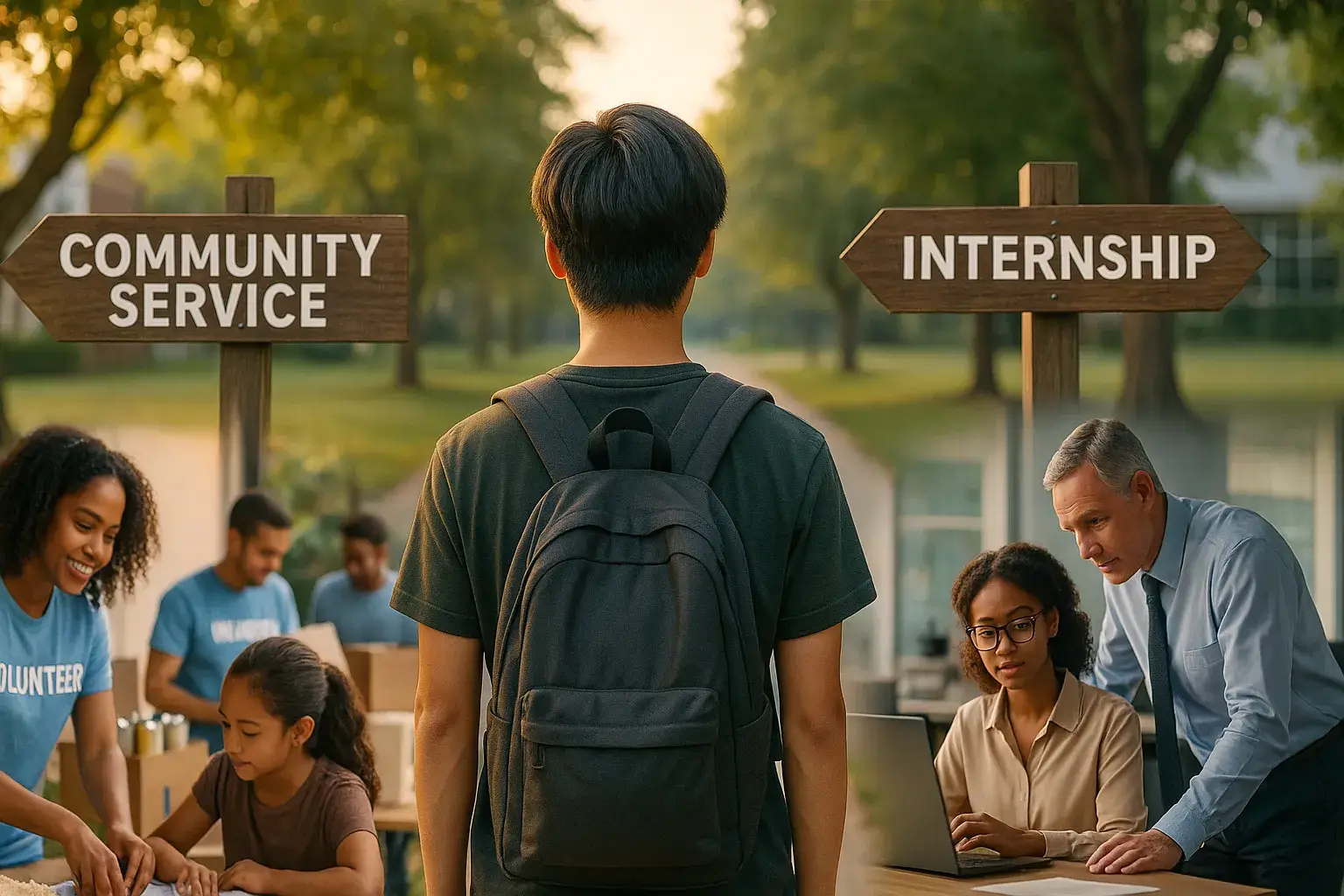
Should you focus on community service or find an internship for high school students?
Good news — there’s no single right answer. Both can help you grow in different ways.
Table of Contents
Toggle5 Key Notes for High School Internships vs. High School Community Service
- “High school community service teaches empathy; internships teach direction.”
Each path builds different strengths — both help you grow into a more confident version of yourself. - “Depth matters more than hours.”
Whether you log 20 or 200 community service hours, what colleges value most is reflection, consistency, and purpose. - “You don’t need every title — you need one story that’s true to you.”
A single high school internship or long-term volunteer project can stand out more than ten scattered activities. - “Community service connects you with purpose; internships connect you with possibility.”
Both experiences help you understand what motivates you — one through giving, the other through exploring. - “At The College Planning Center, we believe your time in high school isn’t about impressing others — it’s about discovering who you are.”
The best college applications come from students who understand themselves, not just those who check every box.

Why This Decision Matters
Let’s be honest — competition is real.
Lots of students get good grades, join clubs, and hold leadership titles. But few spend their time on experiences that truly help them grow.
Choosing between high school community service and a high school internship isn’t just about your college application — it’s about finding what helps you learn, connect, and build real purpose.
Both paths can help you:
- Discover what you enjoy
- Build confidence and empathy
- Strengthen your résumé
- Learn more about yourself
✅ HIGH SCHOOL COMMUNITY SERVICE
What It Is
Community service means giving your time to help others or support a cause — often without pay.
This could include:
- Tutoring younger students
- Helping with events at your community center
- Volunteering at a food pantry
- Cleaning up parks or animal shelters
If you’re searching for community service ideas for high school students, look local — or even try online community service hours for high school students. You might also explore Atlanta Community Services, Brooklyn Community Services, or similar organizations near you.
What You’ll Learn
Through high school community service, you’ll develop:
- Empathy and gratitude
- Responsibility and teamwork
- Civic awareness
- Leadership (even without a title)
- Time management and initiative
These are skills colleges value deeply — and they show that you care about more than just grades.
Why It Matters
High school community service helps you connect with others, understand your strengths, and grow as a person.
It’s not about collecting hours — it’s about impact.
Track your experience using a community service form or community service hours sheet for high school PDF, and reflect often on what you learned.
If you’re wondering how many hours of community service to graduate high school or how many community service hours for high school are “enough,” remember: quality beats quantity. Even colleges reviewing community service examples look for reflection and growth, not just totals.
Keep a short reflection journal after each session — even two sentences about how you felt can help you capture meaningful progress.
Examples and Ideas
Here are some real community service ideas for high school students:
- Literacy tutoring or mentoring younger kids
- Animal rescue volunteering
- Senior-center tech help
- Park cleanups and sustainability projects
- Online tutoring and digital outreach
If you’re pressed for time, look for community service near me for high school students or community service opportunities for high school students through local nonprofits.
You can also apply for community service awards for high school students to recognize your impact.
✅ INTERNSHIPS
What They Are
A high school internship lets you experience real-world work before college. You might get paid — or not — but the learning is always valuable.
You might:
- Shadow a doctor or engineer
- Help a teacher or coach
- Work with marketing or business teams
- Assist a local entrepreneur
If you’re searching for internship programs for high school students, explore both in-person and summer internship programs for high school students. They’re great ways to learn while school’s out.
What You’ll Learn
Internships teach:
- Career clarity and direction
- Communication with professionals
- Responsibility and problem-solving
- How to navigate adult workplaces
Sometimes the biggest win is realizing what you don’t want to do — before you invest in a major.
Why It Matters
A high school internship can build confidence and guide your choices. It makes future decisions about majors and careers less stressful.
If you’re wondering how to get an internship in high school, start small — ask teachers, counselors, or local business owners. Use your college student resume for internship templates to get started early.
Even if it’s unpaid, there are huge benefits of internship for students: mentorship, exposure, and real-world readiness. The benefits of unpaid internships often outweigh the lack of pay because they teach adaptability and purpose.
So… Which One Should YOU Choose?
Both high school community service and high school internships have value.
If helping others energizes you → Service.
If you want hands-on career experience → Internship.
You don’t need both — but you do need depth and consistency.
Colleges prefer students who commit deeply to what matters to them.
At The College Planning Center, we help students explore both paths — whether through community service ideas for high school students or finding the right internship for high school students that aligns with their goals.
A Quick Comparison
If you want to… | Lean Toward |
Help people directly | Community Service |
Explore careers | Internship |
Have flexible hours | Community Service |
Build workplace skills | Internship |
Understand your values | Community Service |
Figure out majors or jobs | Internship |
5 Questions to help you decide:
1️⃣ What excites you more?
Helping others → Service.
Exploring careers → Internship.
2️⃣ What do you need right now?
Purpose → Service.
Direction → Internship.
3️⃣ What’s your schedule like?
Evenings/weekends → Service (try summer community service programs for high school students).
Daytime → Internship (summer internship for high school students works great).
4️⃣ What fits your personality?
People-centered → Service.
Curious and hands-on → Internship.
5️⃣ Where can you commit long-term?
Track your high school community service hours or volunteer experience examples consistently.
Does Volunteer Work Count as Work Experience?
Yes — absolutely!
Students often ask: “Does volunteer work count as work experience?” or “Can volunteer work count as work experience?”
The answer: 100% yes.
Highlight your community service examples and volunteer experience examples on your résumé. These show initiative, leadership, and responsibility — the same skills paid employees need.
Final Thought
You’re living in one of the most competitive college eras ever — and I see it every day at The College Planning Center. But your goal isn’t to build the flashiest résumé; it’s to build a life that means something to you.
Whether it’s high school community service or a high school internship, what matters most is that you:
- Learn from the experience
- Grow from the challenges
- Reflect on what it means to you
- Stay honest about your motivation
Because when you know who you are — or at least who you’re becoming — you’re already standing out.
Carpe diem.
Go make the choice that helps you become a stronger version of YOU.

🧠 FAQs - High School Internships vs. High School Community Service
High school community service means volunteering your time to support others or improve your community — without getting paid. Examples include tutoring, helping at a food bank, or organizing park cleanups.
Requirements vary by school district, but most students complete 40–100 community service hours for high school. Focus less on the total hours and more on consistent involvement and personal growth.
Any unpaid activity that helps a nonprofit, school, or civic organization counts as community service in high schools — such as mentoring, fundraising, environmental work, or event coordination.
High school students can do a lot of different kinds of community service, like volunteering at an animal shelter, tutoring younger kids, collecting food, helping at senior centers, and doing service projects online. You can also look into Atlanta Community Services, Brooklyn Community Services, or other programs in your area.
To find community service opportunities for high school students in your area, search for "community service near me."You can also ask your school counselor, join clubs that do community service, or do community service hours online for high school students.
The benefits of community service for high school students include learning empathy, building leadership skills, and connecting with your community. Colleges also appreciate students who demonstrate consistent volunteerism and reflection.
To start a high school internship, ask teachers or counselors for leads, contact local businesses, or search for internship programs for high school students and summer internship programs for high school students online. Networking and persistence matter more than experience.
Internships help students learn about different jobs, get better at talking to people in a professional setting, and feel more sure of themselves. Internships, even if they don't pay, can help you learn, get experience, and figure out if a career path is right for you.
Yes! Volunteer experience examples can absolutely count as work experience. List your responsibilities and results clearly on your résumé — employers and colleges value the transferable skills you gain.
You don’t have to do both. It depends on what you want to do.If you want to help people, focus on community service in high school. If you're interested in trying out different careers, a high school internship might be a good idea. Both paths show that you are willing to take risks and help you grow.
5 Key Takeaways for High School Internships vs. High School Community Service
- Depth beats quantity. Colleges care more about consistent reflection than a long list of activities.
- Both paths matter. High school community service builds empathy; high school internships build direction.
- Start early. Explore real-world learning before senior year.
- Local and online options count. Try community service near me for high school students or online community service hours for high school students if you’re busy.
- Track your growth. Keep your community service form or hours sheet for high school PDF up to date.

Families Trust Us With Their Future
Real results from real families — read what parents say about working with Chris.

Dana J.
Local Guide · 16 reviews · 2 photos


3 weeks ago

+200 SAT Points · Accepted Everywhere

Gwyn S.
3 reviews · 2 photos
3 weeks ago
Dream School · Merit Scholarship

Ladonna Susan C.
5 reviews · 0 photos
3 weeks ago
+5 ACT Points · $40K+ Scholarships

Special thanks to Christopher Parsons for writing this blog post.
Christopher has a strong educational background, including Doctoral studies in English Literature and Creative Writing, a Master’s Degree in English, and a Bachelor of Arts Degree in English and History. He also has a background in Mass Communications and Public Relations/Marketing.
He has successfully won scholarship offers from prestigious schools and over $250,000 in grants and scholarships. His real-world personal experience resonates well with today’s students.

2 Responses
I really like reading through a post that can make men and women think. Also, thank you for allowing me to comment!
Very well presented. Every quote was awesome and thanks for sharing the content. Keep sharing and keep motivating others.