


Written by Christopher Parsons, M.A. in English, Founder of The College Planning Center. With over 25 years in education, Christopher has guided thousands of families through the admissions journey.
One of the biggest misconceptions in college admissions is that you need a laundry list of activities to impress admissions officers. After more than 20 years of counseling students in South Carolina, I can tell you the opposite is true. Depth, commitment, and genuine passion matter far more than breadth. A student who has deeply invested in two or three activities will almost always stand out more than one who has superficially participated in a dozen.
At College Planning Centers of America, we help students in the Myrtle Beach area and across South Carolina build extracurricular profiles that are authentic, strategic, and compelling. Here is how to approach it the right way.
What Admissions Officers Are Actually Looking For
Admissions committees evaluate extracurricular activities through several lenses:
Sustained Commitment
Joining a club for one semester does not carry much weight. Participating in the same activity for three or four years, especially with increasing responsibility, tells a story of dedication and growth.
Leadership and Initiative
You do not need a formal title to demonstrate leadership. Starting a new club, organizing an event, mentoring younger students, or taking on a significant project within an existing organization all count. Admissions officers want to see that you make things happen rather than simply show up.
Impact
What difference did your involvement make? Did your fundraiser raise a meaningful amount for a local charity? Did your research project produce real results? Did you improve your team’s performance? Quantifiable outcomes help college admissions officers understand the scope of your contributions.
Authenticity
Experienced admissions readers can spot resume padding. If you joined Model UN, the environmental club, student government, the debate team, and three honor societies but cannot speak meaningfully about any of them, the breadth works against you. Choose activities you genuinely care about.
Building Your Profile: A Year-by-Year Approach
Freshman Year: Explore
Your first year of high school is the time to try different activities and discover what resonates. Join a few clubs, try a sport, volunteer with a local organization. Pay attention to what energizes you and what feels like a chore.
For students in the Myrtle Beach area, there are excellent options beyond school walls. The Grand Strand offers volunteer opportunities with environmental organizations, the arts scene downtown, and community service groups that serve the Horry County area.
Sophomore Year: Focus
By your second year, begin narrowing your focus to the activities that genuinely interest you. Drop the ones you joined out of obligation and double down on the ones that excite you. Start taking on more responsibility within those activities.
Junior Year: Lead
This is the year to step into leadership roles. Run for a position, propose a new initiative, or take ownership of a project. Junior year is also when you should be thinking about how your activities connect to your broader narrative for college applications.
Senior Year: Sustain and Reflect
Continue your commitments through senior year. Quitting activities at the start of 12th grade sends the wrong message. Use this time to reflect on what your involvement has meant to you and how it has shaped your goals, which will feed directly into your college essays.
Quality Over Quantity: The “Spike” Strategy
A growing number of admissions experts talk about the concept of a “spike,” a single area where a student has achieved exceptional depth. Rather than being well-rounded across many areas, the strongest applicants are often well-rounded as people but deeply accomplished in one domain.
For example, a student who has volunteered at the same animal rescue organization since freshman year, eventually created a community education program about pet adoption, and plans to study veterinary science has a spike. That narrative is far more compelling than a scattered list of ten unrelated activities.
Types of Activities That Stand Out
Community Service and Volunteering
Sustained volunteer work, especially when it connects to a personal interest, is highly valued. In South Carolina, organizations like Habitat for Humanity, local food banks, and coastal conservation groups provide meaningful opportunities.
Work Experience
A part-time job is a legitimate and respected extracurricular activity. Working at a restaurant on the Grand Strand, helping at a family business, or holding a summer job demonstrates responsibility, time management, and real-world skills.
Independent Projects
Starting a blog, building an app, conducting independent research, or creating a small business shows initiative and self-direction. These projects do not need institutional backing to be impressive.
Arts and Athletics
Participation in the arts, whether theater, music, visual arts, or creative writing, demonstrates creativity and discipline. Athletics teach teamwork, perseverance, and time management. Both are valued.
Academic Competitions and Clubs
Science Olympiad, Math League, DECA, Model UN, and similar organizations demonstrate intellectual engagement beyond the classroom. If these activities genuinely interest your student, they can be powerful additions.
Common Mistakes to Avoid
Joining Everything
More is not better. Admissions officers would rather see four deeply held commitments than twelve shallow ones.
Dropping Activities Senior Year
Consistency matters. Quitting extracurriculars in your final year suggests the involvement was strategic rather than genuine.
Ignoring Non-Traditional Activities
Caring for younger siblings, working to support your family, or managing a household responsibility are real commitments that college admissions officers respect. Do not undervalue these experiences.
Waiting Until Junior Year to Start
Building a compelling extracurricular profile takes time. Students who wait until junior year to get involved miss the opportunity to show sustained commitment.
How College Planning Centers of America Can Help
Building a strong extracurricular profile is most effective when it is part of a comprehensive college plan. At College Planning Centers of America, we work with students starting as early as freshman year to identify interests, choose strategic activities, and build profiles that align with their college goals.
Take the Free Quiz to evaluate your college readiness, or Schedule a Consultation to start building a personalized plan with our team.
The activities you choose in high school are not just resume lines. They are the experiences that shape who you become. Choose wisely, commit deeply, and let your genuine passions guide the way.
Extracurricular Profile for College Admissions: Frequently Asked Questions
An extracurricular profile is the full picture of a student’s extracurricular activities, including commitment, leadership, impact, and personal interests. In college admissions, this profile helps schools understand how a student spends time outside the classroom and whether their involvement shows depth and direction. At College Planning Centers, we help students build an extracurricular profile for college admissions that feels authentic and supports a stronger application narrative.
Colleges almost always prefer quality over quantity in extracurricular activities. A student with two or three meaningful, long-term commitments usually stands out more than a student with a long list of shallow involvement. College Planning Centers guides students toward activities that show real growth, leadership, and sustained commitment instead of resume padding.
There is no perfect number of extracurricular activities for college applications. What matters more is whether the student can show consistency, responsibility, leadership, and impact. A smaller number of well-developed activities is often stronger than trying to join everything.
Colleges look for sustained commitment, leadership, initiative, impact, and authenticity in an extracurricular profile. Admissions officers want to see what a student genuinely cares about and how those experiences connect to personal growth and future goals. At College Planning Centers, we help students identify which activities strengthen their college admissions story most effectively.
A smart year-by-year strategy is to explore in freshman year, focus in sophomore year, lead in junior year, and sustain involvement in senior year. This creates a more natural and compelling extracurricular profile for college admissions. College Planning Centers works with students early so their activities develop with intention instead of becoming rushed in junior year.
Yes. Part-time jobs, caring for siblings, and other family responsibilities can be excellent for college admissions because they show maturity, responsibility, time management, and real-world commitment. These are often undervalued by families, but admissions officers do respect them when they are presented clearly.
A spike in college admissions means a student has exceptional depth in one area, such as research, volunteering, athletics, music, or a long-term project. This can be more memorable than being scattered across many unrelated activities. At College Planning Centers, we help students recognize and strengthen a meaningful spike so their applications show clearer purpose and direction.
Yes, community service can be very important for college applications, especially when it is sustained and connected to a genuine interest. Volunteer work through local organizations, nonprofits, or community groups can show compassion, initiative, and long-term impact. College Planning Centers often helps students connect community service to their broader college planning strategy and personal story.
Yes. College Planning Centers helps students choose extracurricular activities that match their interests, support their academic goals, and strengthen their overall college admissions profile. We work with families to avoid random activity stacking and instead build a more strategic and authentic plan over time.
One of the biggest mistakes is joining too many activities without real involvement or waiting until junior year to get serious. Other common mistakes include dropping activities too early and ignoring meaningful non-traditional commitments. At College Planning Centers, we help students avoid these errors by building a focused extracurricular profile that highlights depth, consistency, and impact.

Families Trust Us With Their Future
Real results from real families — read what parents say about working with Chris.

Dana J.
Local Guide · 16 reviews · 2 photos


3 weeks ago

+200 SAT Points · Accepted Everywhere

Gwyn S.
3 reviews · 2 photos
3 weeks ago
Dream School · Merit Scholarship

Ladonna Susan C.
5 reviews · 0 photos
3 weeks ago
+5 ACT Points · $40K+ Scholarships
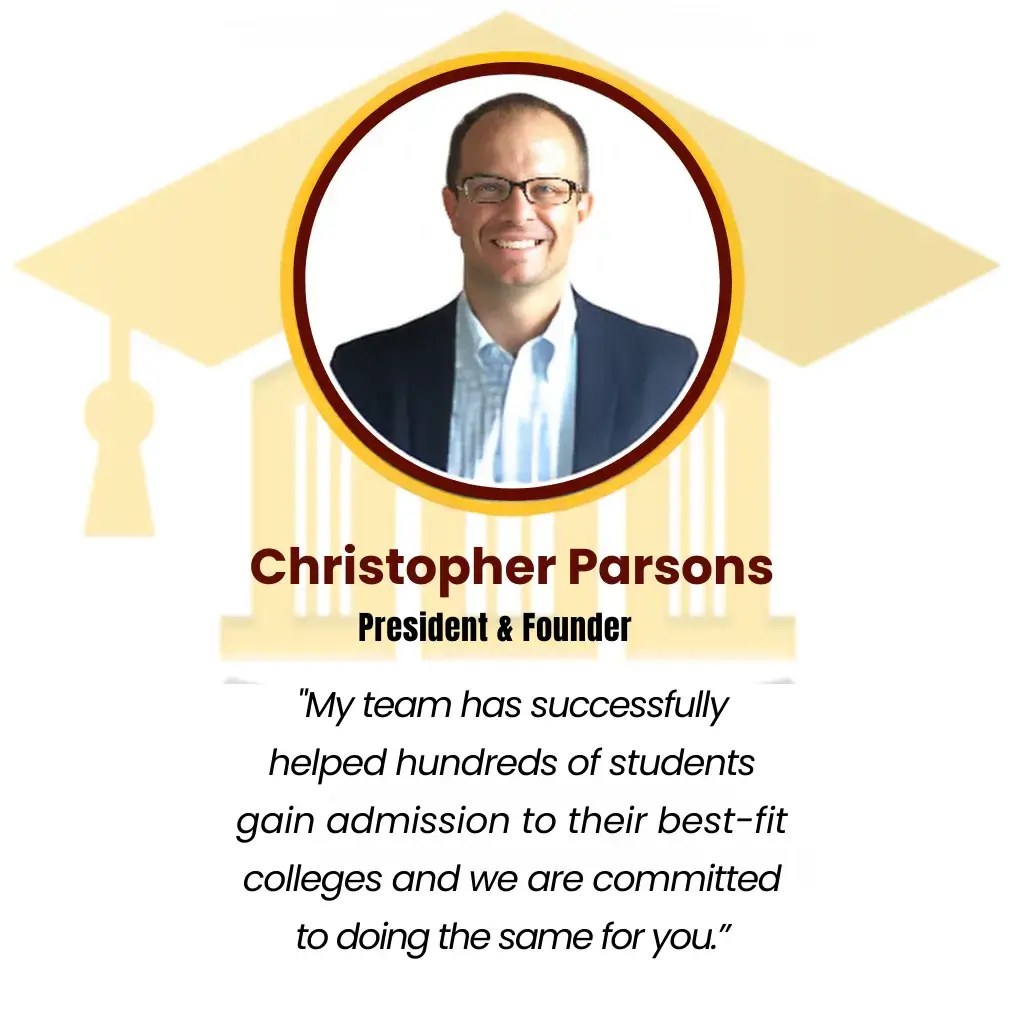
Special thanks to Christopher Parsons for writing this blog post.
Christopher has a strong educational background, including Doctoral studies in English Literature and Creative Writing, a Master’s Degree in English, and a Bachelor of Arts Degree in English and History. He also has a background in Mass Communications and Public Relations/Marketing.
He has successfully won scholarship offers from prestigious schools and over $250,000 in grants and scholarships. His real-world personal experience resonates well with today’s students.
