

Written by Christopher Parsons, M.A. in English, Founder of The College Planning Center. With over 25 years in education, Christopher has guided thousands of families through the admissions journey.
Community service is one of the most frequently discussed elements of a college application, and one of the most frequently misunderstood. Too many students treat volunteer hours like a checkbox: accumulate enough, list them on the application, move on. But college admissions officers at competitive schools can tell the difference between genuine engagement and obligation fulfilled.
I am Christopher Parsons, and I have spent more than 20 years helping South Carolina families navigate the college admissions process through College Planning Centers of America. Here is what I have learned about community service that actually matters.
What Admissions Officers Value in Community Service
Depth Over Breadth
Volunteering at ten different organizations for a few hours each tells an college admissions officer very little. Volunteering consistently with one organization over multiple years tells them you are committed, reliable, and invested in a cause. Depth signals character. Breadth signals resume building.
Initiative and Leadership
The most compelling community service stories involve students who saw a need and took action. You do not need to start a nonprofit. But organizing a beach cleanup, creating a tutoring program at your school, or developing a food drive that serves your neighborhood all demonstrate initiative.
Connection to Your Narrative
The strongest college applications tell a coherent story. If your community service connects to your academic interests, career goals, or personal values, it reinforces the themes that run through the rest of your application.
Genuine Impact
College admissions officers want to know what happened because of your involvement. How many people did you serve? What changed? What did you learn? Vague claims of “helping the community” carry no weight. Specific, measurable impact does.
Community Service Ideas for South Carolina Students
The Myrtle Beach area and the broader South Carolina Lowcountry offer a wealth of opportunities for meaningful community engagement. Here are ideas organized by interest area.
Environmental Conservation
South Carolina’s coastline is one of our greatest assets and one that needs active stewardship. Students can get involved with:
- Beach and waterway cleanups through organizations like Surfrider Foundation’s Grand Strand Chapter or Keep Horry County Beautiful
- Sea turtle conservation programs along the South Carolina coast, where volunteers help with nest monitoring and education during nesting season
- Marsh and wetland restoration projects through the Coastal Carolina University community outreach programs
- Community garden projects that address food access while improving local green spaces
A student who has spent three years volunteering with coastal conservation and plans to study environmental science has a powerful, unified story.
Tutoring and Education
Academic mentoring is one of the most accessible and impactful forms of service. Options include:
- Peer tutoring programs at your high school or local library
- After-school homework help at Boys & Girls Clubs of the Grand Strand
- Literacy volunteer programs for adult learners through Horry County Adult Education
- Virtual tutoring for students in underserved communities, which can be done from anywhere
Students who are strong academically and enjoy teaching can build a sustained tutoring commitment that directly demonstrates their intellectual generosity.
Healthcare and Wellness
For students interested in medicine, nursing, or health sciences:
- Volunteering at Grand Strand Medical Center or other local hospitals
- Assisting at free clinics that serve uninsured residents
- Health education outreach in partnership with school or community organizations
- Organizing wellness initiatives such as mental health awareness events at your school
MUSC and other healthcare institutions across the state also offer structured volunteer programs that provide genuine clinical exposure.
Serving Vulnerable Populations
Some of the most meaningful service work involves directly supporting people in need:
- Habitat for Humanity of Horry County provides hands-on building experience while serving families
- Local food banks and pantries including Helping Hand of Myrtle Beach and Lowcountry Food Bank
- Homeless outreach programs that connect individuals with resources
- Senior companion programs at assisted living facilities and senior centers
Long-term involvement with any of these organizations creates deep, real-world understanding that shows up powerfully in college essays.
Arts and Culture
Students with creative interests can serve through:
- Teaching art or music workshops at community centers or schools
- Volunteering at local theaters such as those in the Myrtle Beach performing arts community
- Creating murals or public art projects that benefit the community
- Organizing cultural events that celebrate the diversity of the Grand Strand area
Creating Your Own Service Project
One of the most impressive things a student can do is identify a gap in their community and create a project to address it. This does not require formal nonprofit status or large-scale funding. Some examples:
- A student who noticed elderly neighbors struggling with technology created a weekly “Tech Help” session at the local library
- A student passionate about reading started a book exchange program at three elementary schools in Horry County
- A student interested in nutrition developed a healthy cooking class for teens at a local community center
These self-initiated projects demonstrate the kind of creativity, empathy, and follow-through that admissions officers remember.
How to Present Community Service on Your Application
Be Specific
Instead of writing “Volunteered at food bank,” write “Organized and led weekly food distribution for 50+ families at Helping Hand of Myrtle Beach, September 2024 to present.”
Quantify Your Impact
Include numbers wherever possible: hours served, people helped, money raised, events organized. Numbers make abstract claims concrete.
Explain Your Role
Describe what you specifically did, not just what the organization does. College admissions officers want to know your personal contribution.
Connect It to Your Growth
In your essays and interviews, explain how the experience changed your perspective or influenced your goals. Reflection is what transforms service into story.
Start Building Your Service Profile Today
Community service is most effective as a college application component when it begins early and grows over time. Students who start volunteering in freshman year and sustain their involvement through senior year build the most compelling profiles.
At College Planning Centers of America, we help students across the Myrtle Beach area and throughout South Carolina develop holistic college plans that integrate community service, academics, and extracurricular activities into a unified strategy.
Explore Resources on our platform, or Schedule a Consultation to work with our team on a plan that positions your student for admissions success.
The best community service is the kind that changes you as much as it changes the community you serve. Start now, stay committed, and let the impact speak for itself.
Community Service for College Admissions: Frequently Asked Questions
Meaningful community service can strengthen college admissions by showing commitment, leadership, empathy, and real-world impact. Admissions officers look for students who serve consistently and can explain what they learned. At College Planning Centers, we help students connect volunteer work and community impact to a stronger college application story.
The most impressive community service is sustained, specific, and connected to a student’s interests or goals. Examples include long-term tutoring, environmental work, healthcare volunteering, or a self-started service project. College Planning Centers helps students identify the types of community service for college admissions that feel authentic and add real value to their profile.
Colleges care more about community impact than just collecting volunteer hours. A student who made a measurable difference through one meaningful commitment often stands out more than someone with scattered service hours across many organizations.
Strong community service ideas for high school students include peer tutoring, food bank volunteering, beach cleanups, health education outreach, senior support programs, and student-led service projects. The best choice is one that matches the student’s strengths, values, and future goals.
College Planning Centers helps students build a stronger service profile by identifying the right opportunities, encouraging long-term involvement, and showing families how community service, academics, and extracurricular activities can work together in one college planning strategy.
For college admissions, one long-term volunteer project is usually better than many unrelated activities. Depth, reliability, and growth matter more than a long list. Admissions officers want to see that a student cared enough to stay involved and make a real contribution.
Yes. A student-created service project can be very powerful for college applications because it shows initiative, leadership, problem-solving, and follow-through. At College Planning Centers, we often encourage students to think beyond joining programs and instead ask where they can create impact in their own community.
Students should be specific about what they did, who they helped, and what changed because of their involvement. Good descriptions include leadership, hours served, people impacted, and personal growth. College Planning Centers helps students present community service for college admissions in a way that is clear, measurable, and memorable.
Students should ideally start community service in freshman or sophomore year so they have time to build consistency and leadership before senior year. College Planning Centers encourages students to start early because the strongest college admissions profiles are built over time, not rushed at the last minute.
Yes. College Planning Centers helps students choose community service ideas that align with their interests, intended majors, and long-term goals. We guide families in building a more strategic college planning approach so service work becomes part of a coherent, compelling admissions narrative.

Families Trust Us With Their Future
Real results from real families — read what parents say about working with Chris.

Dana J.
Local Guide · 16 reviews · 2 photos


3 weeks ago

+200 SAT Points · Accepted Everywhere

Gwyn S.
3 reviews · 2 photos
3 weeks ago
Dream School · Merit Scholarship

Ladonna Susan C.
5 reviews · 0 photos
3 weeks ago
+5 ACT Points · $40K+ Scholarships
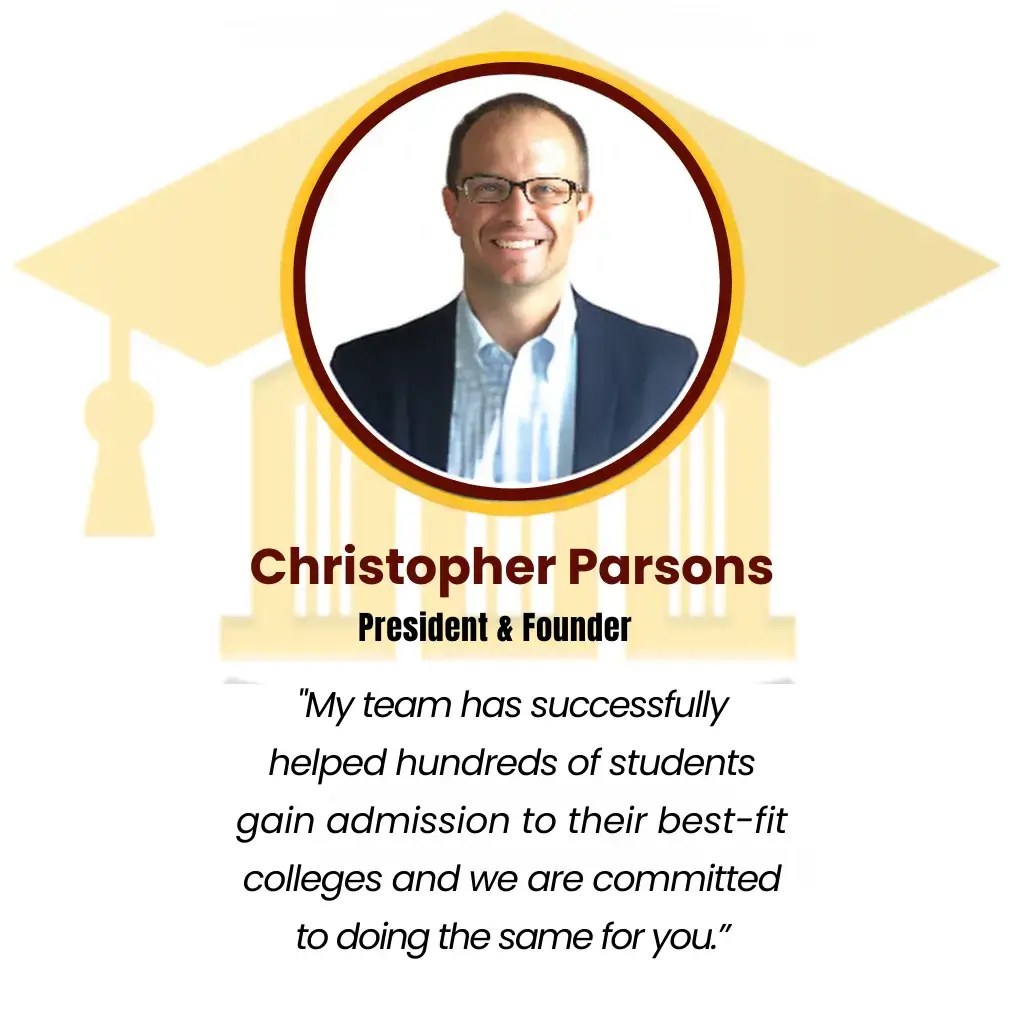
Special thanks to Christopher Parsons for writing this blog post.
Christopher has a strong educational background, including Doctoral studies in English Literature and Creative Writing, a Master’s Degree in English, and a Bachelor of Arts Degree in English and History. He also has a background in Mass Communications and Public Relations/Marketing.
He has successfully won scholarship offers from prestigious schools and over $250,000 in grants and scholarships. His real-world personal experience resonates well with today’s students.