


Written by Christopher Parsons, M.A. in English, Founder of The College Planning Center. With over 25 years in education, Christopher has guided thousands of families through the admissions journey.
High school community service and high school internships are two of the most important ways students can spend their time outside of class. Over the past two decades, The College Planning Center has seen students try to differentiate themselves through activities, but the key is meaningful growth rather than just volume.
Some are starting nonprofits at 15. Others are launching clubs with loosely defined missions. Still others are racing from one opportunity to the next, exhausted and unsure of who they really are or what they actually enjoy.
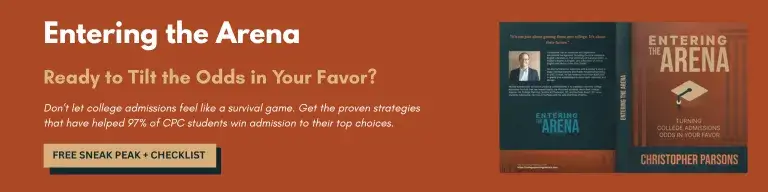
It’s this increasingly reactive approach to high school — where students collect experiences like merit badges rather than pursue meaningful growth — that inspired us to write our upcoming book, Entering the Arena: Turning College Admissions Odds in Your Favor. We want to help families cut through the noise and understand what actually matters.
Here is what we’ve seen again and again:
Even the most well-intentioned students feel pressure to choose the “right” résumé checkbox instead of the path that helps them develop into stronger, more curious, more self-aware human beings.
And nowhere is this confusion more pronounced than in the debate over how students should spend their limited time outside of school: should they focus on community service or seek out a high school internship?”
Table of Contents
Toggle5 Keynotes
- “Community service teaches empathy; internships teach purpose.”
- “You don’t need more activities — you need more reflection.”
- “Depth > breadth — it’s the story behind your hours that counts.”
- “Colleges want evidence of curiosity, not perfection.”
- “Meaningful engagement is more powerful than the fanciest internship.”
New Book Release — November 15
Entering the Arena: Turning College Admissions Odds in Your Favor
After decades of guiding students and families through an increasingly complex admissions landscape, this book helps demystify the process and spotlight what actually moves the needle.
Inside, you’ll find:
- Practical strategies to build a meaningful student profile
- Tools to cut through anxiety and decision paralysis
- Real stories from students we’ve worked with
- Ways to pursue purpose rather than pressure
A clear, compassionate guide to building a purposeful high school journey — without losing yourself in the process.
Why Community Service Still Matters (and What Colleges Actually Notice)
Community service in high schools opens a student’s eyes to the needs of others. It pulls them beyond their immediate world and challenges them to give time and energy without expecting anything in return. Colleges look beyond raw high school community service hours to see what counts as community service for high school — consistency, contribution, and reflection.
What Community Service Builds
- Empathy
- Reliability
- Teamwork
- Civic awareness
- Gratitude
Community Service Ideas for High School Students
Start with interests: literacy tutoring, youth sports mentoring, senior-center tech help, park cleanups, food bank logistics, or environmental projects. If schedules are tight, consider online community service hours for high school students, such as remote tutoring or digital outreach for nonprofits.
Community Service Hours: Quality Over Quantity
Searches like community service hours, how many hours of community service to graduate high school, and how many community service hours for high school reveal a common anxiety: “Do I have enough?” The better question is: What did I learn and contribute?
Use a community service form or a community service hours sheet for high school PDF to track your work. If recognition motivates you, explore community service awards for high school students, but remember: depth matters more than a certificate.
Keep a reflection log of community service examples — even two sentences after each session will help you capture growth over time.
Why Internships Matter (Yes, in High School)
A high school internship experience helps students explore experiences help students explore the professional world long before they commit to a career. Even a few days of job shadowing can clarify whether an industry or role fits their strengths and interests.
What Internships Build
- Career clarity
- Professional communication
- Workplace readiness
- Confidence around adults
Benefits of Internship (for Students)
Whether paid or unpaid, a high school internship gives you real-world exposure. Many students and parents search for benefits of internship. Internships help students articulate meaningful stories for applications.
If pay is not available, understand the benefits of unpaid internships — mentorship, learning opportunities, and exposure to new fields — but balance your time, equity, and transportation costs.
How to Get an Internship in High School
Finding a high school internship doesn’t have to be complicated. If you’re wondering how to get an internship start small:
- Ask a local business owner or teacher for leads.
- Follow up after career fairs.
- Use your school’s counselor or career office.
Explore formal internship programs for high school students or summer internship programs for high school students in your area. Searching for summer internship for high school students brings options ranging from local businesses to national programs.
At The College Planning Center, we encourage families to focus on internships that match curiosity and learning goals, not just prestige.
So… Which Should Students Choose?
There isn’t one right answer for everyone. Both experiences can help students grow, but they do so in different ways. A high school internship helps you explore career skills early and helps you feel more confident and ready for work, while community service helps you understand others and find meaning in your life. The best option is the one that helps you grow and think about yourself in a real way.
The Key Is Depth, Not Category
Too many students chase what “looks impressive.” A high school internship means nothing without reflection. You don’t need five leadership titles or the flashiest internship. What matters is meaningful engagement — time spent doing something that helps you grow into a more grounded, thoughtful, passionate person.
Depth > breadth. Whether your depth comes from tutoring weekly or managing social media for a small business, the key is to:
- Show up consistently
- Develop new skills
- Reflect on what you learned
That’s what stands out — and that’s what we teach at The College Planning Center.
4-step Framework for Choosing
Step 1 — Which Energizes You More?
- Helping others → Service (use those community service ideas for high school students).
- Career curiosity → Internship.
Step 2 — What’s Your Schedule Like?
- Structured daytime → Internship.
- Evenings/weekends → Service. Try summer community service programs for high school students if you want seasonal options.
Step 3 — What Do You Need Most?
- Clarity + direction → Internship.
- Purpose + connection → Service.
Step 4 — Where Can You Commit Deeply Over Time?
Consistency beats novelty. Track your high school community service hours and collect volunteer experience examples to showcase impact.
Does Volunteer Work Count as Work Experience?
A lot of students want to know if volunteering counts as work experience. Yes, especially if you can show what you’ve learned and how you’ve done it. Is it possible to include volunteer work on a resume as work experience? It’s also true. Prioritize quantifiable tasks, hours, and outcomes.
🧠 FAQs (Quick Answers Families Search For)
Varies by district; aim for consistent engagement over a specific number.
Any unpaid contribution to a nonprofit, school, or civic organization.
Join school clubs, volunteer locally, or try online community service hours for high school students.
Talk to businesses in your area or look into programs that let high school students work as interns.
Yes, unpaid internships can help you learn and get clear on things.
Colleges don’t have a set number; they value reflection and consistency.
Definitely—volunteering can help you find interests you didn't know you had.
Tutoring, environmental work, community outreach, or leadership in long-term service.
Not exactly — internships show skill-building, while service shows empathy and purpose.
High school students can learn new skills and gain confidence through summer jobs and community service programs..
5 Key Takeaways
- Colleges care more about depth than quantity; they want students to be consistent and think about what they do.
- Both paths are important: community service helps you understand how others feel, and internships help you figure out what you want to do.
- Start early—get some real-world work experience before your senior year.
- There are both online and local options. A digital service or an internship nearby can be just as helpful.
- Write down your hours, events, and thoughts to keep track of how you’re doing.
Bottom Line
Students don’t have to do everything. They need to pick experiences that have a purpose, like ones that help them grow, question things, think about them, and give back.
The most important thing for a student to do, whether you’re doing a high school internship or community volunteering, is to commit, get involved, learn, and think about what they did. That’s what makes you a better person, creates a great story, and makes you stand out.
Carpe diem.

Families Trust Us With Their Future
Real results from real families — read what parents say about working with Chris.

Dana J.
Local Guide · 16 reviews · 2 photos


3 weeks ago

+200 SAT Points · Accepted Everywhere

Gwyn S.
3 reviews · 2 photos
3 weeks ago
Dream School · Merit Scholarship

Ladonna Susan C.
5 reviews · 0 photos
3 weeks ago
+5 ACT Points · $40K+ Scholarships
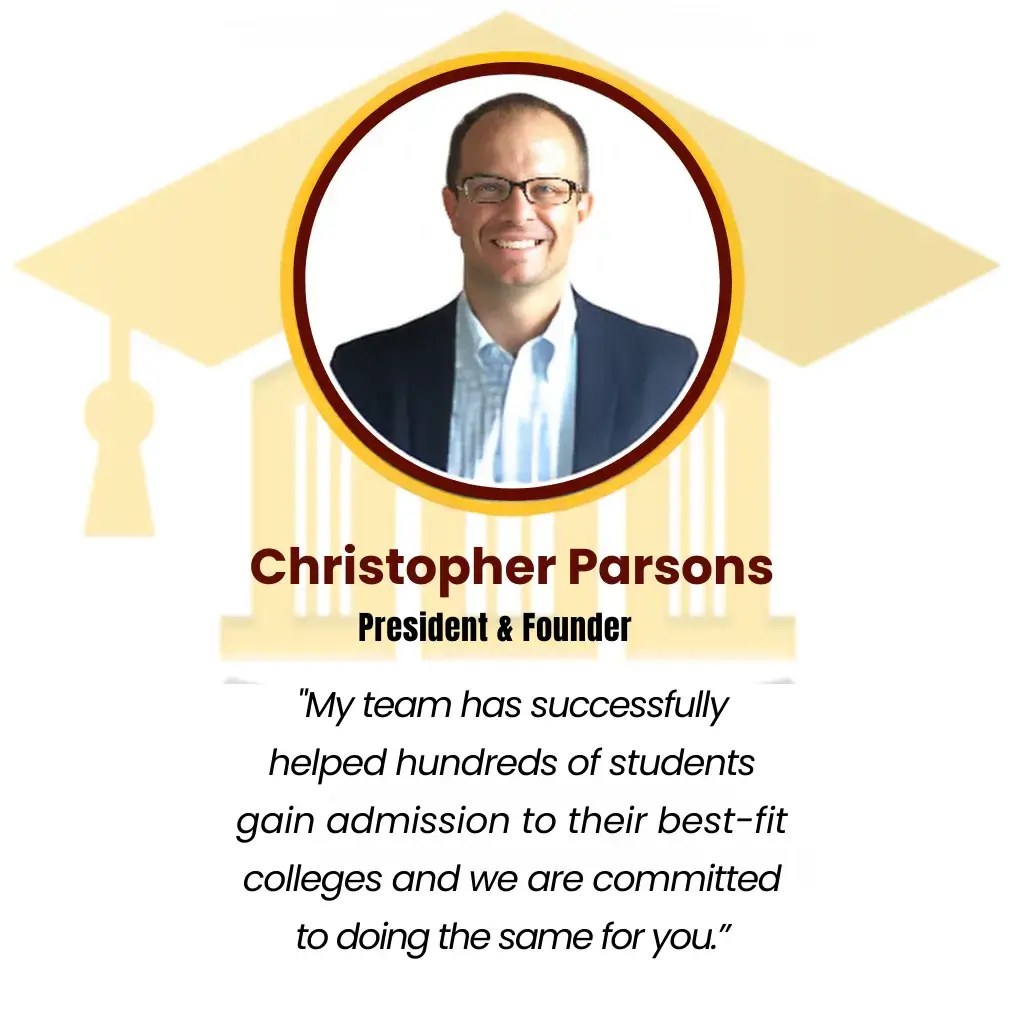
Special thanks to Christopher Parsons for writing this blog post.
Christopher has a strong educational background, including Doctoral studies in English Literature and Creative Writing, a Master’s Degree in English, and a Bachelor of Arts Degree in English and History. He also has a background in Mass Communications and Public Relations/Marketing.
He has successfully won scholarship offers from prestigious schools and over $250,000 in grants and scholarships. His real-world personal experience resonates well with today’s students.



One Response
Wow wonderful blog layout How long have you been blogging for you make blogging look easy The overall look of your site is great as well as the content